
Apple
The Perils of AI-Generated News Summaries: Why Apple needs a smarter approach

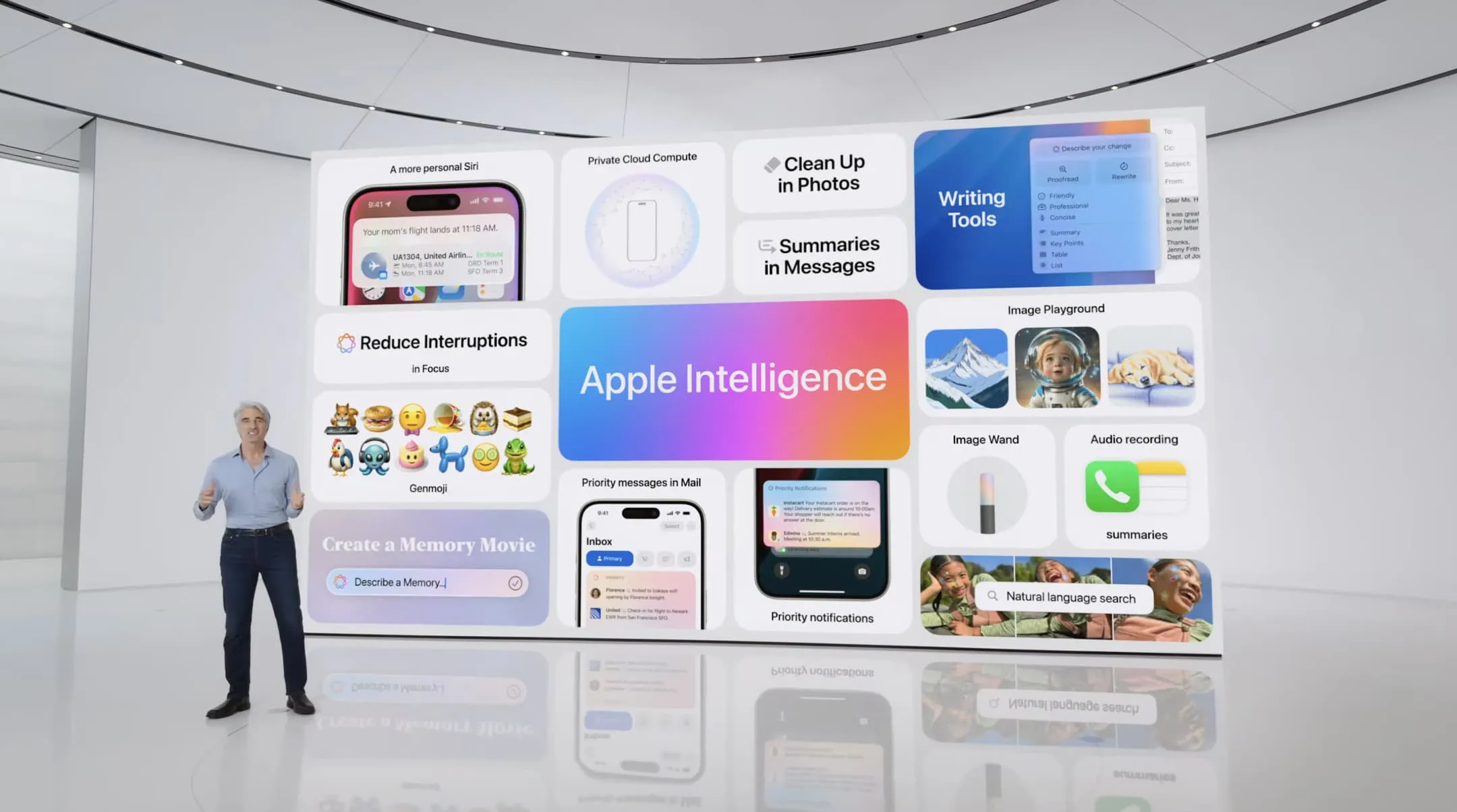
Artificial intelligence promises to simplify our lives, to sift through the noise and deliver concise, relevant information. However, recent developments with Apple Intelligence’s notification summaries have exposed a critical flaw: the potential for AI to inadvertently create and spread misinformation. This isn’t just a minor glitch; it’s a serious issue that demands a more thoughtful solution than simply tweaking the user interface.
Several high-profile incidents, notably highlighted by the BBC, have brought this problem to the forefront. These incidents include AI-generated summaries that falsely reported a person’s death, fabricated the outcome of sporting events, and misattributed personal information to athletes. These aren’t just minor errors; they are instances of AI effectively fabricating news, with potentially damaging consequences.
Apple’s proposed solution – a UI update to “further clarify when the text being displayed is summarization” – feels like a band-aid on a much deeper wound. While transparency is important, it doesn’t address the core problem: the AI is generating inaccurate information. Simply telling users that the information is a summary doesn’t make the information any more accurate.
A more effective, albeit temporary, solution would be for Apple to disable AI-generated summaries for news applications by default. This approach acknowledges the unique nature of news consumption. Unlike a mis-summarized text message, which is easily corrected by reading the original message, news headlines often stand alone. People frequently scan headlines without reading the full article, making the accuracy of those headlines paramount.
Furthermore, news headlines are already summaries. Professional editors and journalists carefully craft headlines to encapsulate the essence of an article. For Apple Intelligence to then generate a “summary of the summary” is not only redundant but also introduces a significant risk of distortion and error. It’s akin to summarizing a haiku – the very act of summarizing destroys the carefully constructed meaning.
The BBC’s reporting highlighted that the problematic summaries often arose from the AI attempting to synthesize multiple news notifications into a single summary. While this feature is undoubtedly convenient, its potential for inaccuracy outweighs its benefits, especially when it comes to news. Temporarily sacrificing this aggregated view is a small price to pay for ensuring the accuracy of news alerts.
Apple has thus far successfully navigated the potential pitfalls of AI-generated images, a feat that has eluded many of its competitors. However, the issue of AI news summaries presents a new challenge. While continuous improvements to the underlying AI models are undoubtedly underway, a more immediate and decisive action is needed. Implementing an opt-in system for news app summaries would provide a crucial safeguard against the spread of misinformation. It empowers users to choose whether they want the convenience of AI summaries, while protecting those who rely on headlines for quick information updates.
This isn’t about stifling innovation; it’s about responsible implementation. Once the AI models have matured and proven their reliability, perhaps news app summaries can return as a default feature. But for now, prioritizing accuracy over convenience is the only responsible course of action.
Apple Reaffirms Commitment to User Privacy Amidst Siri Lawsuit Settlement
In a related development, Apple has publicly reaffirmed its commitment to user privacy, particularly concerning its voice assistant, Siri. This announcement comes on the heels of a $95 million settlement in a lawsuit alleging “unlawful and intentional recording” of Siri interactions.
In a press release, Apple emphasized its dedication to protecting user data and reiterated that its products are designed with privacy as a core principle. The company explicitly stated that it has never used Siri data to build marketing profiles or shared such data with advertisers.
Apple detailed how Siri prioritizes on-device processing whenever possible. This means that many requests, such as reading unread messages or providing suggestions through widgets, are handled directly on the user’s device without needing to be sent to Apple’s servers.
The company also clarified that audio recordings of user requests are not shared with Apple unless the user explicitly chooses to do so as feedback. When Siri does need to communicate with Apple’s servers, the requests are anonymized using a random identifier not linked to the user’s Apple Account. This process is designed to prevent tracking and identification of individual users. Audio recordings are deleted unless users choose to share them.
Apple extended these privacy practices to Apple Intelligence, emphasizing that most data processing occurs on-device. For tasks requiring larger models, Apple utilizes “Private Cloud Compute,” extending the privacy and security of the iPhone into the cloud.
The 2019 lawsuit that prompted the settlement alleged that Apple recorded Siri conversations without user consent and shared them with third-party services, potentially leading to targeted advertising. The suit centered on the “Hey Siri” feature, which requires the device to constantly listen for the activation command.
Despite maintaining its commitment to privacy and highlighting the numerous changes implemented over the years to enhance Siri’s privacy and security, Apple opted to settle the case. Details regarding how users can claim their share of the settlement are yet to be released. This situation underscores the ongoing tension between technological advancement and the imperative to protect user privacy in an increasingly data-driven world.
Moving from an Android phone to an iPhone—or the other way around—can often feel like a big chore. Right now, when you get a new phone, moving all your important information over from the old phone can be a complicated mess. However, it seems that Google and Apple are working together to fix this, making the switch between the two types of phones much smoother.
We recently got a sneak peek into the future by looking closely at the code of Google’s Android Switch app. This app is what helps people move their data from an iPhone to a new Android device, like a Pixel. What we found inside the hidden code suggests that several new types of personal information might soon be able to transfer automatically.
Currently, when you switch phones, basic items like photos, videos, contacts, and calendar dates usually move over. But things that make your phone yours often get left behind.
The new code hints that the following items could soon be included in the transfer process:
- Accessibility Settings: These are the special settings people use to make their phone easier to operate, such as larger text sizes or specific display settings. Being able to transfer these means you won’t have to spend time setting up your phone just to be able to use it comfortably.
- Music Playlists: If you have music lists on your iPhone, the updated system might allow them to move to a service like YouTube Music on your Android device.
- Passwords and Passkeys: This is a big one. Right now, you usually have to sign back into every single app manually. Soon, the system could automatically bring over your saved login details and newer “Passkeys,” providing a truly seamless experience.
- Wallet Cards: Moving credit and debit cards from one digital wallet (like Apple Wallet) to another (like Google Wallet) is not possible today, but the code suggests this convenience could be added.
- Wi-Fi Credentials: While your phone might remember the name of your home Wi-Fi, it often doesn’t remember the password, forcing you to type it in again. The change suggests the actual Wi-Fi passwords will transfer over, making it so your new phone connects instantly.
It’s important to remember that this information comes from looking at code that hasn’t been released yet. So, while it shows what Google and Apple are planning, we need to wait for an official announcement to know exactly how and when these improvements will become available.
Since the two companies are working together, these features are likely to help users switch from Android to iPhone, too. Once these changes arrive, getting a new phone won’t mean starting from scratch anymore.
A key screen supplier, BOE, is running into serious trouble providing the special display panels (OLED screens) for Apple’s newest phone lineup, the iPhone 17. Because of these technical setbacks, a main competitor, Samsung Display, is now expected to land a much bigger supply deal with Apple.
Sources familiar with the matter confirm that BOE has faced quality control and technical difficulties that it has not yet managed to fix. This means the company will be unable to deliver the display panels it was planning to ship this year. As a direct result, Samsung Display will likely be stepping in to cover the missing supply needed to build the phones.
The iPhone 17 is Apple’s current flagship model and is available in four versions: the standard, Air, Pro, and Pro Max. Apple is expecting to ship more than 90 million units of this new series throughout the year. The screens for these devices are usually provided mainly by Samsung Display and LG Display. At the moment, Samsung provides displays for all four models, while LG supplies three of the versions, not including the Pro.
BOE had originally planned to provide screens, specifically for the high-end iPhone 17 Pro models in the Chinese market. The main issue stems from Apple’s decision to use a more advanced screen feature called LTPO across the entire iPhone 17 series this year. This proved to be a major hurdle for BOE, which did not have prior experience making LTPO panels for Apple.
After many months of work, BOE finally received approval to start large-scale production in the early third quarter, to supply up to ten million panels. However, problems with reliability kept happening. By mid-November, these ongoing issues were still not solved. Due to these failures, BOE’s expected total shipments, which could have reached 40 million screens, will now be significantly lower.
Samsung Display is currently bridging this gap. Its screen supply to Apple is expected to increase from an initial 80 million panels to roughly 90 million this year. This is a critical move that will ensure Apple can still meet its manufacturing targets for all four iPhone 17 models without delay.
With BOE struggling to deliver, Samsung Display is now set to further solidify its position as Apple’s most important partner for OLED screens. The company stands to gain more business and maintain its lead in the competitive iPhone screen market throughout 2025.
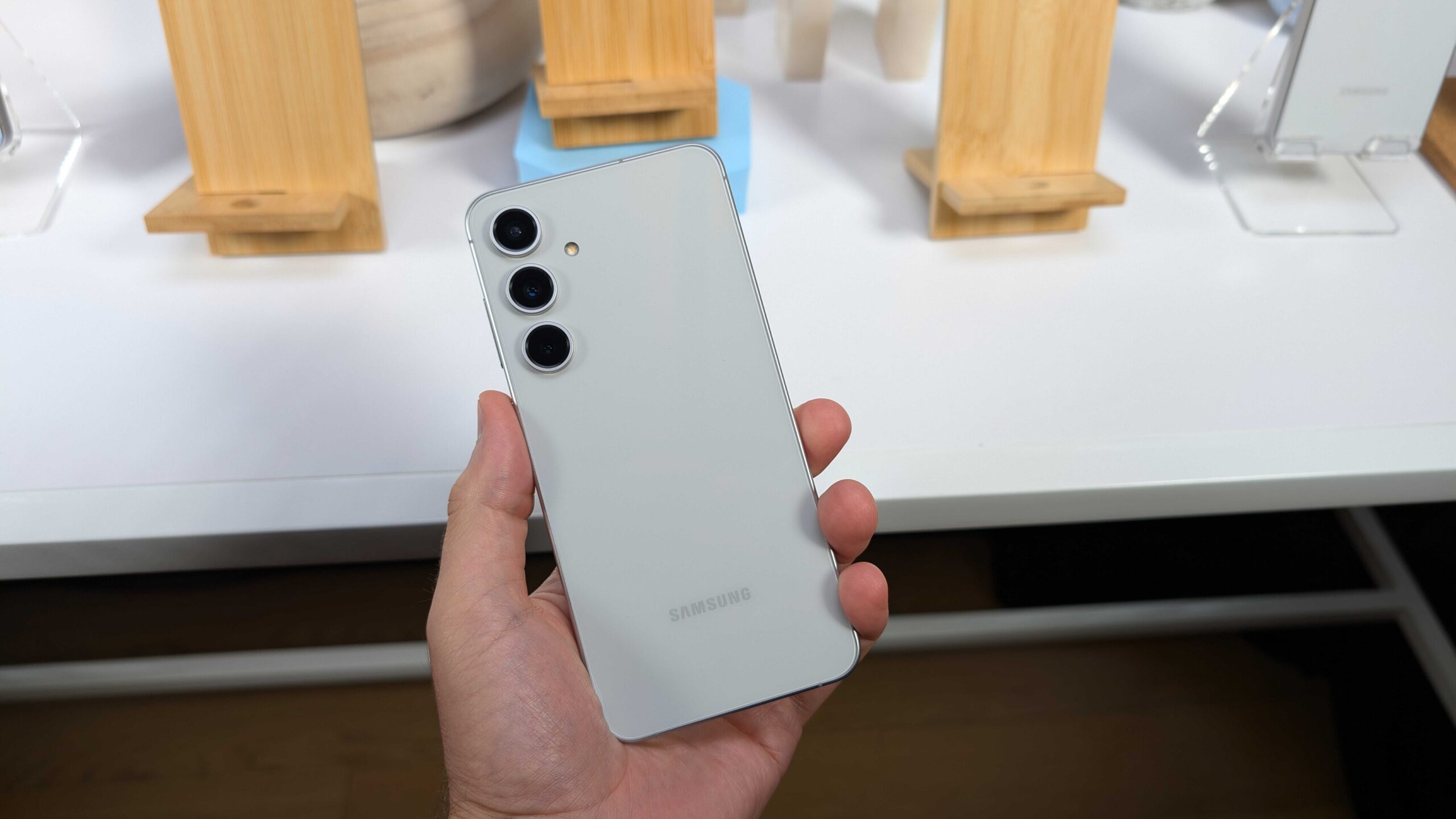
Samsung has been busy with its phone lineup lately. Just a short time after bringing out the Galaxy S25 FE, the company is already pushing its very first software fix to users. This mid-tier flagship is the last piece in the Galaxy S25 family puzzle, joining the regular trio and the slim Galaxy S25 Edge model.
The update is starting in Europe and should spread to other places soon. Folks with the Galaxy S25 FE won’t have to hold out for the newest software skin right away, since it came loaded with One UI 8 from day one – one of the rare Samsung phones to do so. This fresh patch carries the build number S731BXXU1AYIB.
It packs in the September 2025 security fix, along with tweaks for smoother running and better protection overall. The patch tackles a bunch of weak spots in the system that could let hackers in. Samsung has already sent this same September update to plenty of other phones worldwide.
Don’t look for any flashy new tricks here, though. Those are saved for the bigger One UI 8.5 jump, which early peeks suggest could bring some real changes. Shifting gears to what’s next, Samsung’s popular Galaxy A5x line keeps drawing crowds with its smart mix of features and wallet-friendly prices.
The Galaxy A56 only hit shelves a few months back, but word is already out on its follow-up, the Galaxy A57.Spotters caught the Galaxy A57 in the IMEI database, listed under the code SM-A576B/DS for the two-SIM version. It’s no big shock, as Samsung sticks to a yearly refresh for these hits.
Rumors point to the Galaxy A57 running on the fresh Exynos 1680 processor. Test scores show it packs a revamped brain for tasks and a graphics part that’s twice as strong as the one in the A56’s Exynos 1580. That could mean smoother games and quicker everyday stuff. The camera side might get a boos, too, though details are still fuzzy. Based on past patterns, expect the Galaxy A57 to drop in the early months of 2026, keeping the mid-range magic alive.
Galaxy A57 5G SM-A576B/DS spotted😁 pic.twitter.com/zsD5YHf0xE
— Erencan Yılmaz (@erenylmaz075) September 25, 2025
-
 News6 months ago
Samsung expands One UI 8 updates with new camera support, watch upgrade, and wider testing
-
 News6 months ago
Samsung testing One UI 8.5 on Galaxy A26 as Good Lock updates begin
-
News6 months ago
Samsung begins testing One UI 8.5 on Galaxy S22, Tab S9, and popular A-Series phones
-
 News6 months ago
Samsung Galaxy S26 and S28 to feature custom graphics alongside new Galaxy Buds 4 Pro
-

 News6 months ago
Samsung’s new three-way Folding phone faces real-world toughness tests
-
 News6 months ago
Samsung’s future phones to feature better satellite tech and powerful new chips
-
News6 months ago
Samsung tests new One UI 8.5 update on more phones
-

 Android6 months ago
Google releases quick fix for Pixel phones to stop apps from crashing